About Dhauli Hills
Dhauli Hills is a historic archaeological and Buddhist pilgrimage site on the bank of the Daya River, south of Bhubaneswar in Khordha district, Odisha. The hill is associated with the Kalinga War and Emperor Ashoka's transformation from military conquest to the pursuit of peace and righteousness. Visitors come to see the ancient Ashokan Rock Edicts, the rock-cut elephant and the modern Dhauli Giri Shanti Stupa, also known as the Peace Pagoda.
Dhauli represents the transition from war to peace and combines ancient Mauryan heritage with a modern Buddhist peace memorial. The hill also has a nearby Dhavaleswar Shiva Temple, giving the area both Buddhist and Shaivite religious significance.
Key Attractions & Things to See
Dhauli Giri Shanti Stupa
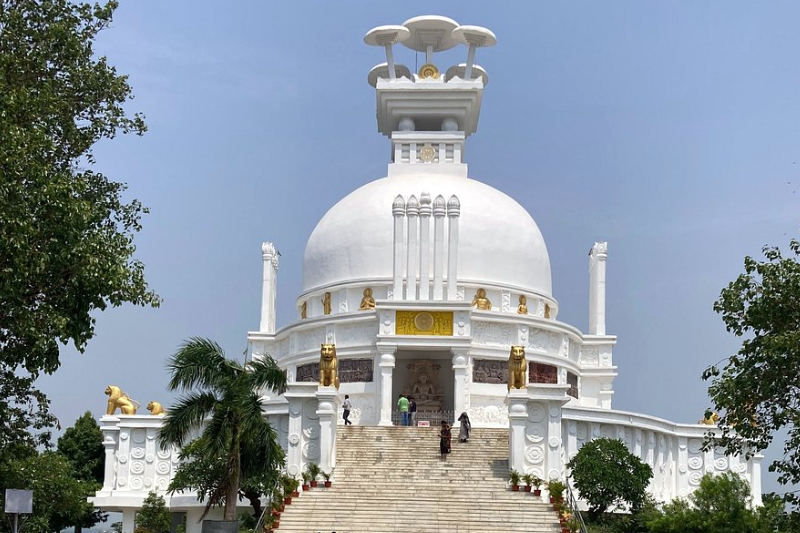
The Dhauli Giri Shanti Stupa is the prominent landmark on top of Dhauli Hill. The white hemispherical Peace Pagoda was constructed between 1970 and 1972 through a joint initiative of the Kalinga Nippon Buddha Sangha and the Government of Odisha. It was inaugurated on November 8, 1972.
The stupa features Buddhist relief panels and golden statues depicting episodes associated with the life and teachings of Buddha. Its elevated position provides views towards the surrounding landscape and the Daya River basin.
Ashokan Rock Edicts
The Ashokan Rock Edicts are carved into a granite rock at the foot of Dhauli Hill. Dating to the 3rd century BCE, the inscriptions were created during the reign of Emperor Ashoka.
Dhauli contains Special Kalinga Edicts directed towards the administrators of Tosali, the ancient provincial capital associated with the region. The inscriptions are written in Prakrit using the Brahmi script.
Rock-Cut Elephant
A rock-cut elephant emerges from the granite rock above the edict area. It is one of the oldest surviving rock-cut sculptures in India and is associated with the elephant symbolism connected with the birth of Buddha.
Dhavaleswar Shiva Temple
The nearby Dhavaleswar Temple is a traditional Shiva temple situated along the hilltop ridge. The temple represents the Shaivite religious presence around Dhauli and attracts local Hindu worshippers, particularly during Shravana and Shivaratri.
Daya River
The Daya River flows at the foot of Dhauli Hill. The river is historically associated with the Kalinga War and forms an important part of the historical landscape surrounding Dhauli.
Popular Activities & Things to Do
Visitors can explore the Ashokan Rock Edicts and rock-cut elephant, walk around the Peace Pagoda complex and observe its Buddhist sculptures and relief panels.
The hill is suitable for historical sightseeing, Buddhist pilgrimage, heritage exploration, photography in permitted areas and quiet reflection at the Peace Pagoda.
Visitors can also explore the nearby Dhavaleswar Temple and view the Daya River landscape.
During the Dhauli-Kalinga Mahotsav, the area hosts classical dance and martial arts performances, including Odissi, Chhau, Kalaripayattu and Thang-Ta.
How to Reach
By Road
Dhauli Hills is located south of Bhubaneswar near Uttara Junction and is accessible by road from the Bhubaneswar–Puri corridor. Motorable roads lead up to the main hilltop parking area.
Auto-rickshaws, app-based cab services and city buses provide local transport options. Mo Bus services operate towards Uttara and Dhauli Square, from where visitors can continue to the hill by auto-rickshaw.
By Train
Bhubaneswar Railway Station is approximately 10 km from Dhauli Hills. Visitors can continue from the railway station by cab or auto-rickshaw, with the journey generally taking around 20–30 minutes.
By Air
Biju Patnaik International Airport in Bhubaneswar is approximately 11 km from Dhauli Hills. A taxi journey takes around 25–35 minutes, depending on traffic and the route taken.
Distance Chart
-
Bhubaneswar Railway Station: Approximately 10 km
-
Biju Patnaik International Airport: Approximately 11 km
-
Lingaraj Temple: Approximately 8.5 km
-
Cuttack: Approximately 38 km
-
Puri: Approximately 52 km
-
Konark Sun Temple: Approximately 57 km
Best Time to Visit
Winter: October to February
Winter is the most comfortable period for visiting Dhauli Hills. Temperatures generally range from 15°C to 28°C, making outdoor walking and sightseeing more comfortable.
Summer: March to June
Summer is hot and humid, with temperatures generally ranging from 26°C to 42°C. Early morning visits between 6:00 AM and 9:00 AM are more comfortable than visiting during the hotter part of the day.
Monsoon: July to September
The monsoon season brings temperatures of around 24°C to 32°C and can produce heavy rain spells. The surrounding landscape becomes greener, but wet granite surfaces can become slippery.
Visitor Timings & Entry Information
The main Stupa and hill area are open from 6:00 AM to 6:00 PM.
Entry to the main Shanti Stupa and Ashokan Rock Edicts is free.
The Light and Sound Show is scheduled in two evening sessions, from 7:00 PM to 7:35 PM and 7:45 PM to 8:20 PM. The schedule can vary according to season and weather, and separate charges apply.
Modest casual clothing is appropriate for visiting the site. Visitors need to remove their footwear before entering the main stupa platform.
Photography and videography are allowed in outer areas. Drone photography requires prior permission from the relevant authorities.
Nearby Essential Facilities
Drinking Water
Drinking water facilities and water kiosks are available around the hill parking area.
Food & Refreshments
An OTDC cafeteria, local refreshment stalls and souvenir shops operate around the main parking area.
Toilets
Public toilet facilities are available around the hill parking area.
Fuel
Dhauli Hills itself is primarily a heritage and pilgrimage site. Visitors travelling by private vehicle should plan fuel requirements before reaching the hill area.
Parking
Dedicated parking facilities are available near the hilltop and along the route towards the upper plateau area.
Wheelchair Accessibility
The motorable road reaches the stupa level, providing access to the upper area. Paved paths are available around the lower edict area, while some upper stupa sections require stair access.
Travel Tips & Visitor Advice
-
Visit early in the morning to avoid stronger heat and larger crowds.
-
Allow around 1.5 to 2 hours to explore the Ashokan Edicts, rock-cut elephant, Peace Pagoda and nearby Dhavaleswar Temple.
-
Wear comfortable slip-on footwear because shoes must be removed before entering the upper Peace Pagoda platform.
-
Avoid touching or writing on the ancient Ashokan rock surface.
-
Take extra care on granite surfaces during and after rainfall.
-
Carry drinking water, particularly during summer visits.
-
Late afternoon can be suitable for enjoying the hill landscape and remaining for the evening Light and Sound Show.
-
Follow site rules around the protected archaeological structures and avoid restricted areas.
Dhauli Hills is one of Odisha's important historical and Buddhist heritage destinations, combining the ancient Ashokan Rock Edicts and rock-cut elephant with the modern Dhauli Shanti Stupa. Located near the Daya River and Bhubaneswar, the site offers a distinctive experience of history, archaeology, religion and the enduring theme of the transition from war to peace.
Frequently Asked Questions
Find answers to common questions about Dhauli Buddhist Site: History, Things to See & Travel Guide.